Pulsar / Motion Intelligence™
Human rhythm.
Intelligently arranged.
From human movement to Motion Signatures, then into an adaptive session for Pulsar F1.
Explore the motion ↓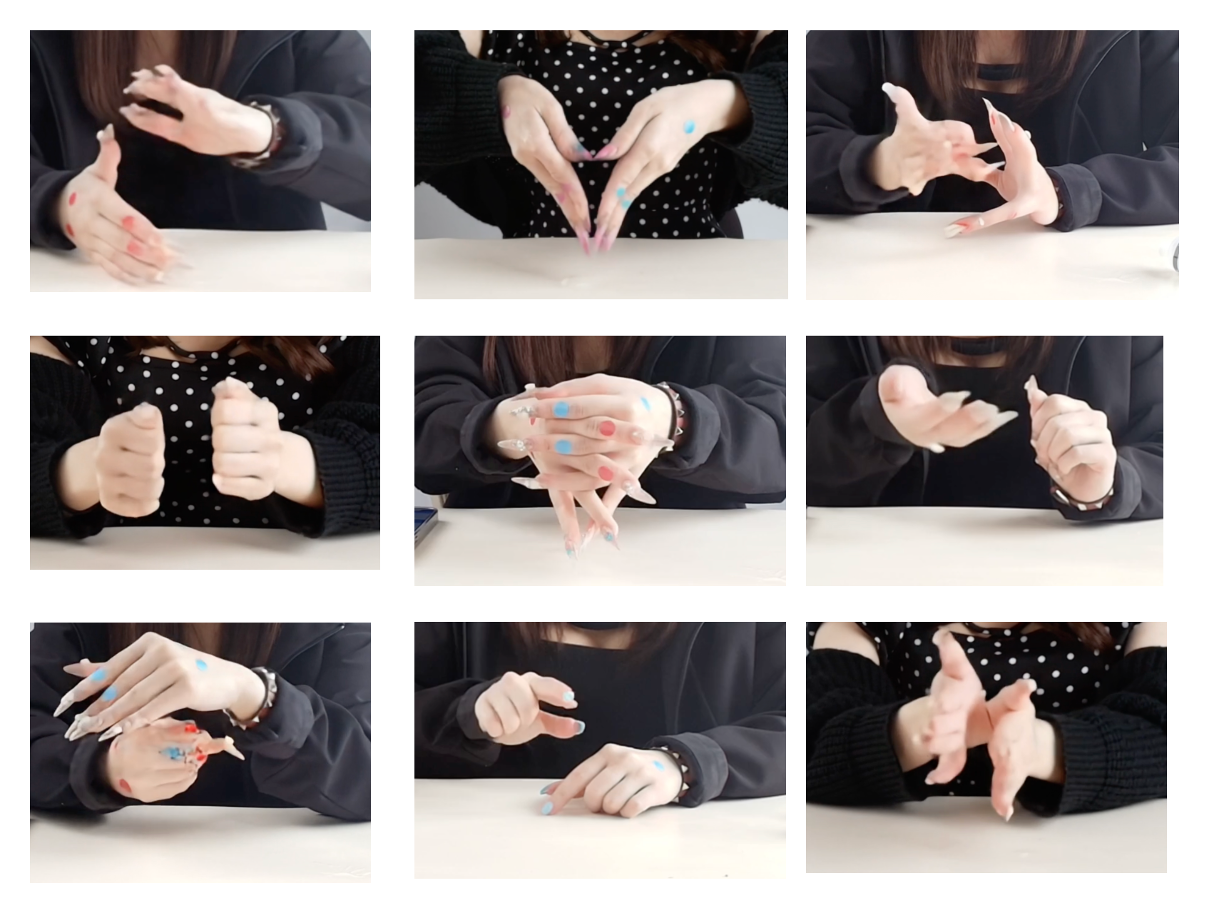
01 / Expert technique learning
Movement becomes a signature.
Human techniques change in rhythm, pacing and progression. Motion analysis captures those characteristics as reusable building blocks called Motion Signatures.
The research behind this system studied more than 40 technique archetypes. The demonstration below traces recorded human motion into a curve, then highlights representative segments used to form motion prototypes.
Interactive research demonstration · On smaller screens, scroll across to explore the full view.
02 / Real-time AI choreography
A signature is a starting point.
The AI Motion Engine can arrange, blend and adapt Motion Signatures into a changing session timeline.
Session signals and saved motion preferences can inform the arrangement. The visualization shows how these inputs relate to the engine and timeline; its curves and controls explain the concept, rather than reporting live device output or reproducing the current app interface.
Interactive research demonstration · On smaller screens, scroll across to explore the full view.
03 / From planning to hardware
Designed for the movement F1 can make.
Motion Intelligence plans an experience within the device’s physical capabilities.
Current F1 motor functions are linear reciprocation and vibration. Human techniques provide rhythm and pacing references; the device does not reproduce every hand movement. The nominal 20 mm specification describes travel of the upper internal sleeve mechanism, not rigid movement of the entire silicone sleeve.
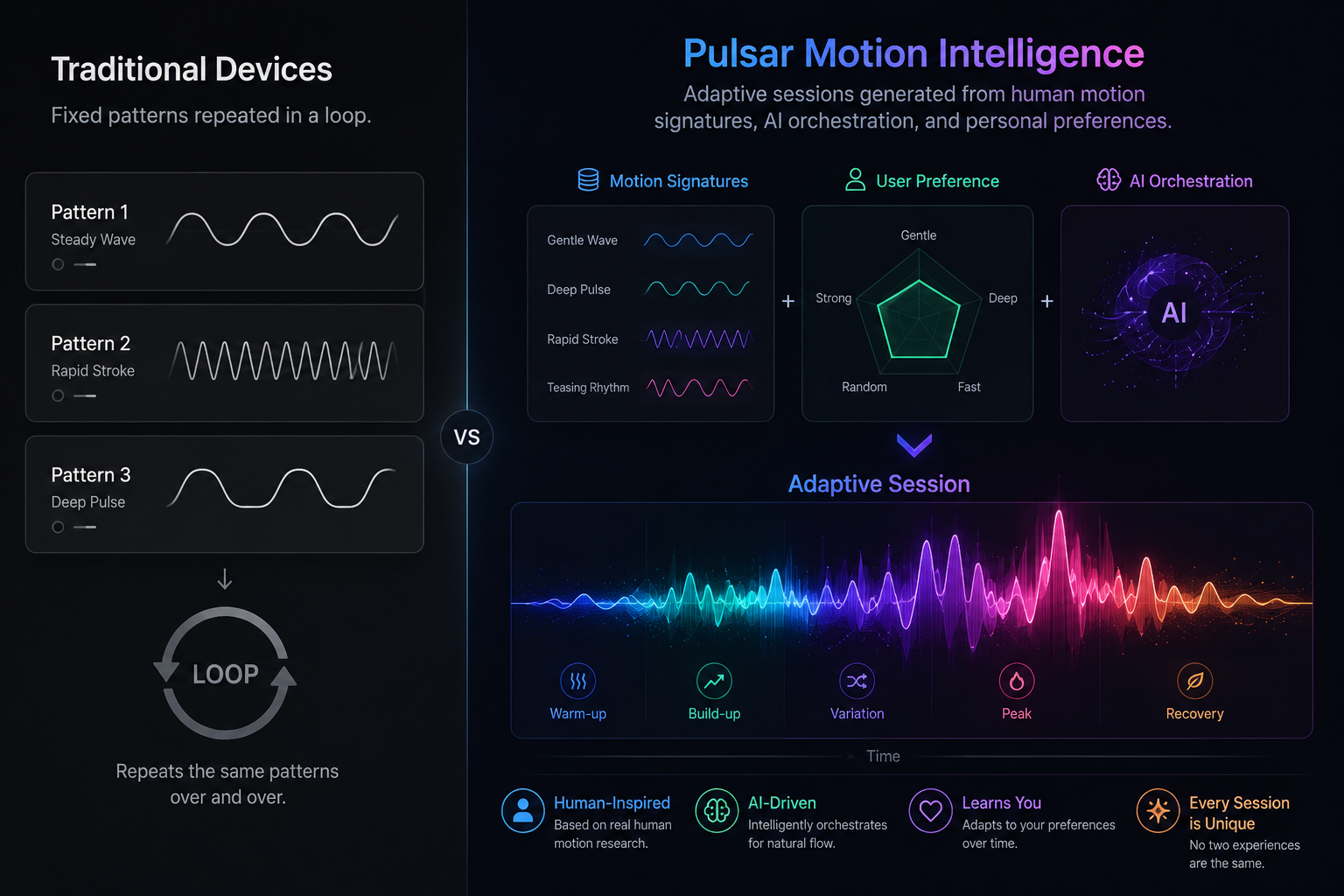
What about Funscript?
Imported Funscript follows a separate server-side planning path. The engine dynamically converts changes in scripted position into executable speed and duration, with smoothing, movement merging and speed limits. It primarily follows rhythm and timing, rather than tracking every position or matching a fixed preset library.
Read the Funscript explanation →04 / Preferences over time
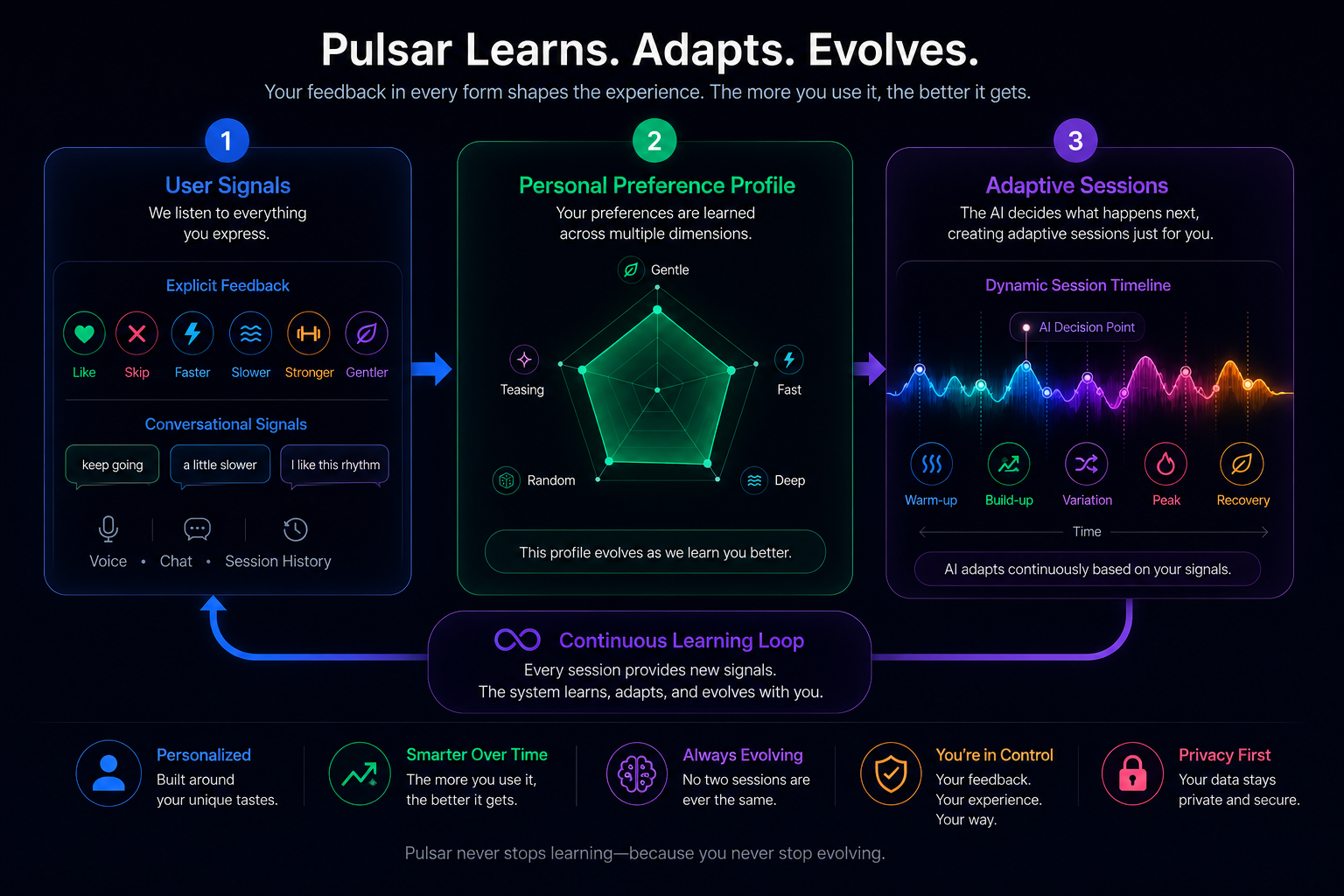
Adaptation starts with preferences.
Structured motion preferences can help an AI Character adjust its motion behavior over time.
Preferences can be saved and associated with your account or AI Character. Pulsar’s default retention is two years for these preferences and for control instructions actively entered by the user. Automatically generated session commands follow a different, session-end deletion rule.
Explore Pulsar F1